
Seagate FireCuda Gaming SSD 500GB

Don't like the alternatives?
Choose from the full offer
Seagate FireCuda Gaming SSD 500GB
If you wish to store more data, you'll need the Seagate FireCuda Gaming SSD 500GB external SSD. It sports a capacity that can store a total of 500 GB. The abbreviation SSD stands for Solid State Drive. That means it is a disk without moving parts. In contrast to a classic HDD, the SSD from Seagate is much faster and more durable. It is suitable for frequent travel because it better withstands vibrations or shocks.
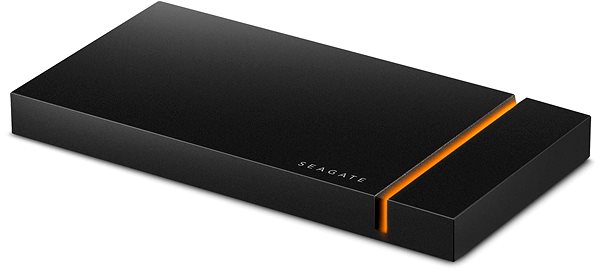
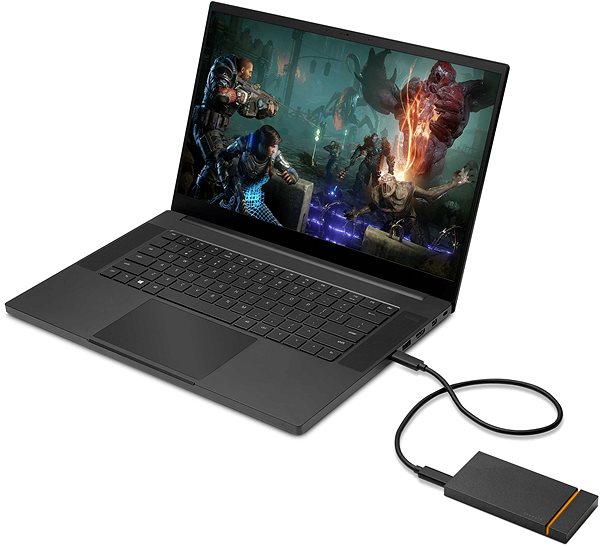
Seagate FireCuda Gaming SSD 500GB External SSD Key Features
- Type: SSD
- Seagate SSD does not belong to disks sensitive to shock
- The highest data loading speed is 2000 MB/s
- Interface: NVMe
- Packaging includes Cable
- External disk capacity: 500 GB
- Disk weight: 100 g
Seagate FireCuda Gaming SSD 500GB Speed and Interface
The highest reading speed reaches a limit of 2000 MB/s. For connection to a computer and data transfer, the Seagate FireCuda Gaming SSD 500GB disk uses the NVMe interface. Thanks to this, you can take advantage of the universal connector. In addition to the disk, the package has Cable.
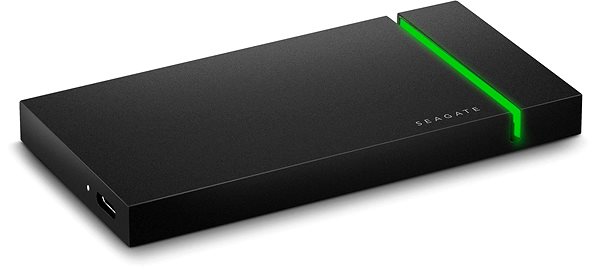
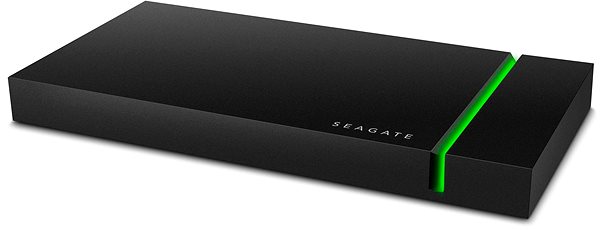
Seagate FireCuda Gaming SSD 500GB Speed and Interface
Its maximum possible reading speed is limited to 2000 MB/s. For data transfer, the Seagate FireCuda Gaming SSD 500GB drive uses the NVMe interface. You can therefore take advantage of the double-sided, universal connector. Besides the disc, the package includes Cable.
Specifications
Type and capacity
Utilisation
Dimensions
Weight
Features
| Code: | FR065f1 |
| Links: | Producer's Website: |
| Manufacturer information |
Seagate Technology (Netherlands) B.V., Tupolevlaan 105, 1119 PA Schiphol-Rijk, Netherland http://www.seagate.com/legal/eu-gpsr-contact-us Seagate is headquartered in the famous Silicon Valley. It is a world leader in the manufacture and sale of hard drives for desktop computers, laptops and other devices. Seagate products are focused on maximum reliability in data storage. Year after year, their storage capacity, transmission speeds, and price-storage ratio improve, in step with the constantly growing amount of data in the world. 
|